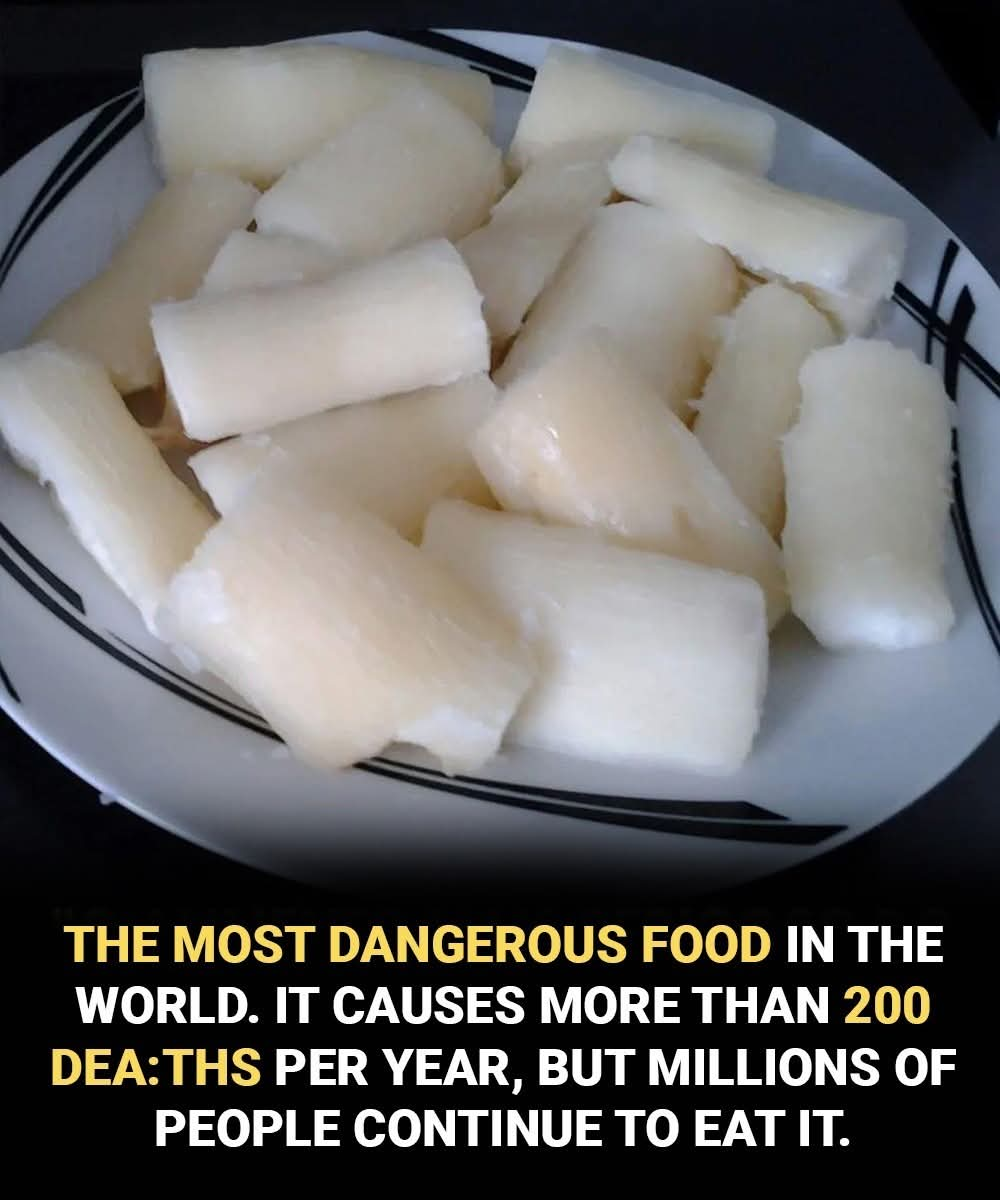
The World’s Deadliest Delicacy: Why 500 Million People Risk Death for Cassava
It is a silent killer hiding in plain sight. While most people associate “deadly food” with exotic pufferfish or toxic mushrooms, the reality is far more common. Every year, more than 200 people lose their lives to a staple crop that feeds nearly 500 million people globally: Cassava.
Known also as manioc or yuca, this starchy root is the third-largest source of carbohydrates in the tropics. But beneath its tough skin lies a chemical defense system that can be fatal if ignored.
The Hidden Danger: Cyanide in the Root
The danger of cassava isn’t a bacteria or a virus; it is cyanide. The plant naturally produces cyanogenic glycosides to protect itself from being eaten by insects and animals.
* Sweet Cassava: Contains lower levels of toxins, usually concentrated in the skin.
* Bitter Cassava: Contains significantly higher levels of toxins throughout the entire root.
If the root is not processed correctly—through peeling, soaking, boiling, or fermenting—the toxins convert into hydrogen cyanide when ingested. This can lead to acute poisoning, resulting in dizziness, vomiting, and, in severe cases, death within hours.
Why Do 500 Million People Still Eat It?
If the risks are so high, why does it remain a dietary cornerstone? The answer lies in survival and resilience.
* Drought Resistance: Cassava is a “survivor” crop. It thrives in poor soil and can withstand extreme heat and drought that would kill maize or wheat.
* Food Security: For millions in Africa, South America, and Southeast Asia, cassava is the only reliable source of calories when other harvests fail.
* Versatility: From tapioca pearls in your bubble tea to garri in West Africa and farofa in Brazil, it is an incredibly versatile ingredient.
The Long-Term Toll: Beyond Fatalities
While the 200 annual deaths are tragic, the “silent” impact is even broader. In areas where poverty limits food variety, chronic exposure to low levels of cyanide from poorly processed cassava leads to a condition called Konzo.
> Konzo is an irreversible paralytic disease that permanently affects the legs, primarily striking children and young women during periods of famine or drought when people are forced to eat the roots quickly without proper processing.
>
Safety Through Tradition
The good news is that cassava is perfectly safe when handled with care. Traditional methods—such as soaking the roots for several days or thorough grating and roasting—effectively remove the toxins. Modern food science is also working on “bio-fortified” and low-cyanide varieties to make this essential crop safer for the future.
Cassava represents a complex balance between risk and necessity. It is a reminder that for a significant portion of the world, the most dangerous food isn’t a luxury—it’s a lifeline.