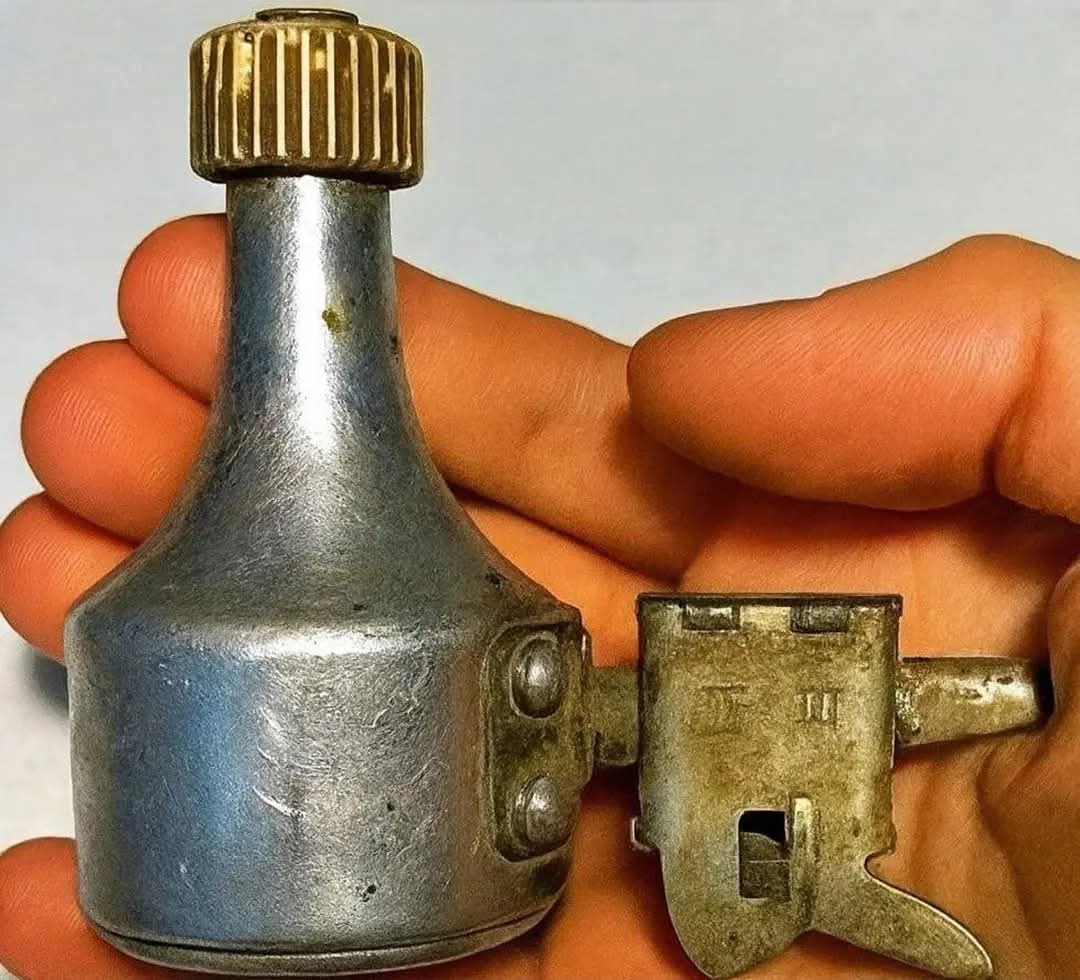
The Engagement Lever: The metal bracket on the side allows the rider to “flip” the dynamo against the tire when it gets dark and pull it away during the day to reduce friction.
When the bike moves, the tire spins the drive cap, which rotates the internal magnet within the coil. Through the process of electromagnetic induction, this creates a low-voltage alternating current (AC) used to power the headlamp and taillight.
The Nostalgia of the Ride
While efficient in its own way, the dynamo had its quirks. The light would get brighter the faster you pedaled, and it would dim—or disappear entirely—when you stopped at a red light. It also added a distinct “whirring” sound to the ride and created noticeable resistance, making the cyclist work just a little bit harder for their illumination.
Why It Matters Today
Finding one of these in a yard or an old garage is like finding a piece of industrial history. It represents a time when devices were built to be mechanical, repairable, and entirely self-sufficient. In an age of “disposable” electronics, the vintage dynamo stands as a testament to durable, green energy.