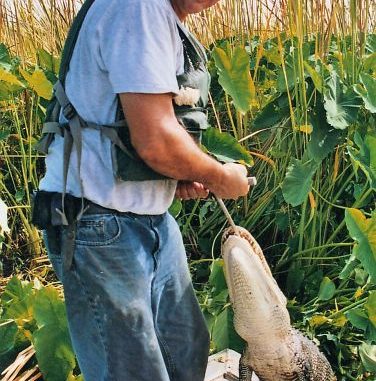
For centuries, Louisiana has captivated the American imagination with its stunning bayous, flavorful cuisine, and diverse wildlife. TV shows like Swamp People have only fueled curiosity—especially about the state’s legendary alligators.
Stories about these creatures—called “crocodiles” by the French—started appearing shortly after Sieur d’Iberville founded the Louisiana colony in 1699. One of the earliest records comes from Iberville’s own diary:
“We saw many crocodiles,” he noted while exploring Bayou Manchac. “I killed a small one, about 8 feet long. They are very good to eat.”
Andre Penicaut, who accompanied Iberville, claimed the French named one of Louisiana’s streams Riviere-aux-Chiens (“River of Dogs”) because a crocodile once ate one of their dogs there. This stream is likely today’s Riviere aux Chenes (Oak River) in St. Bernard Parish.
Another early explorer, Le Page DuPratz, often mentioned alligators in his memoirs, describing not only their abundance but their massive size. He wrote about killing a “monstrous” alligator with a musket ball, measuring 19 feet long, with a 3.5-foot head and a 2-foot-2-inch thick belly. A man named Mehane reportedly killed one even larger—22 feet long—potentially breaking the current world record of 19 feet, 2 inches.
An 1854 Harper’s New Monthly Magazine article also described enormous alligators: skulls with jaws that opened 5 feet wide, a 21-foot specimen caught in Pascagoula Bay, and a 17-foot one killed by famed painter James J. Audubon in the Three Rivers area. The article marveled at the alligator’s ability to survive long periods without food.
Living in Concordia Parish, the article’s author received a request from a European scientist for live alligators. Soon, alligators began arriving at his doorstep, including one so large its jaws could “swallow any philosopher who dared interfere.” The author eventually shipped two alligators to Europe, traveling five months by steamboat and train. Remarkably, they arrived alive, sustained only by faith, sunlight, and dew.
During the 18th and 19th centuries, alligators thrived across Louisiana, especially along the Red River, where Audubon once saw hundreds at a time—smaller ones riding on the backs of larger ones, all groaning and bellowing like raging bulls preparing to fight.
In 1873, the Lafayette Advertiser shared a humorous tale from a Yankee reporter on a Red River steamboat. A newcomer unfamiliar with alligator lore was told that boats on a gloomy bayou were towed not by steam, but by trained alligators harnessed like oxen, pulling vessels with cables.
Many writers described alligators as dangerous to animals. One told of a pack of hunting dogs in Opelousas that would howl to lure nearby alligators out of the water, then quickly flee across the stream before the reptiles could catch them. The same author noted alligators’ fondness for pork, recounting a fierce fight between an alligator and an old hog, which ended with the alligator retreating while the hog rested victorious in the mud.
Alligators even battled bears, as one story tells of a fisherman witnessing a massive black bear fighting a 6-foot-tailed alligator along a Louisiana stream. After repeated clashes, both fell into the water and the fight ended quietly beneath the surface. The bear eventually escaped, dripping wet but alive.
Though often feared, many writers insisted alligators rarely posed a real threat to humans. The 1854 Harper’s article recounted how Dr. Livingston and companions shot alligators near Baton Rouge, with the reptiles dying quietly and showing no hostility. Another author described camping near an alligator nest and hearing an enormous alligator thrash and bellow through the night after being shot.
See the next page to continue reading the article
