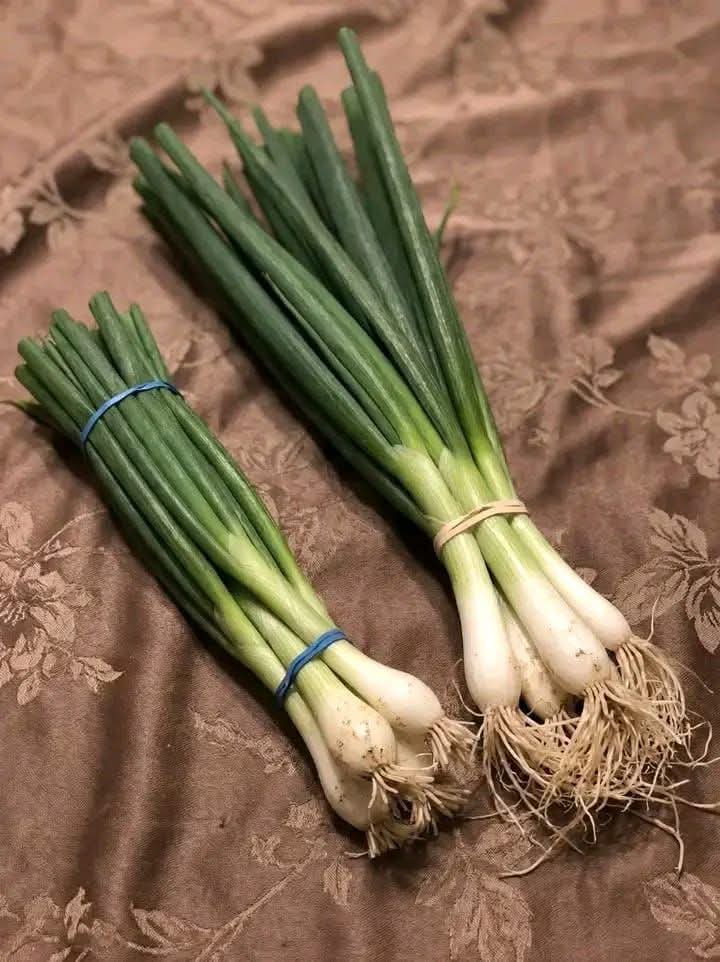
Green Onions vs. Scallions: The Grocery Store “Drama” That Proofs Your Mother-in-Law Might Be Wrong
We’ve all been there: you’re trying to be helpful, you run an errand for a family member, and somehow you still end up in the “doghouse.” Recently, a story went viral about a woman whose mother-in-law sent her to the store for green onions. When she returned, she was met with a rude lecture because she had supposedly bought scallions instead.
The mother-in-law refused to use them, claiming they were entirely different plants. But before you start questioning your eyesight or your grocery-shopping skills, let’s clear the air once and for all.
The Big Secret: Is There Actually a Difference?
If you feel confused, don’t worry—so was the store manager, and so is the rest of the world. Here is the cold, hard truth: Green onions and scallions are the exact same thing.
In the botanical world, both belong to the species Allium fistulosum. The names are used interchangeably depending on which part of the world you are in.
* In the United Kingdom and Australia, they are often called “Spring Onions” (though there is a tiny catch there).
* In the United States and Canada, “Green Onions” and “Scallions” are identical.
Why the Confusion?
If they are the same, why are there two names? It usually comes down to marketing and regional labels:
* Scallion: This term is more common on the East Coast of the US and in professional culinary circles.
* Green Onion: This is the more common household term used in the Midwest and Western US.
At the supermarket, you might see them labeled as one or the other, but they are pulled from the same dirt, have the same long hollow green tops, and the same small, white, non-bulbous roots.
The “Spring Onion” Exception
If your mother-in-law was being extremely technical, she might have been thinking of Spring Onions. While they look similar, there is a slight difference:
* Green Onions/Scallions: Have a straight white base with no bulb. They are harvested very young.
* Spring Onions: Are harvested a bit later, so they have a small, distinct round bulb at the bottom. They taste a bit stronger and sweeter than a regular scallion.
However, if what you brought home had a straight white stem, you bought exactly what she asked for!
How to Handle the “Kitchen Drama”
If you find yourself in a standoff over a bunch of onions, here are a few facts to keep in your back pocket:
* Taste Test: They taste identical. Both have a mild onion flavor that is sharp at the white end and fresh/herbal at the green end.
* Cooking: You can swap one for the other in any recipe—from stir-frys to salads—without a single person noticing.
* The Label: Often, stores will use both names on the same price tag just to avoid this exact confusion!
Conclusion
In the case of the “Rude Mother-in-Law vs. The Scallion,” the science is on your side. You didn’t get the wrong item; she just got the wrong attitude! Next time, you can confidently tell her that whether it’s a scallion or a green onion, it’s going to taste great in the salad.
Have you ever been “corrected” on something that turned out to be the same thing? Tell us your funniest grocery store stories in the comments!